In every industry, knowledge evolves faster than textbooks can keep up. New technologies emerge, regulations change, customer expectations shift, and business models transform almost overnight. While formal education provides a strong foundation, it often cannot match the pace of real-world innovation.
This is where professional communities become invaluable.
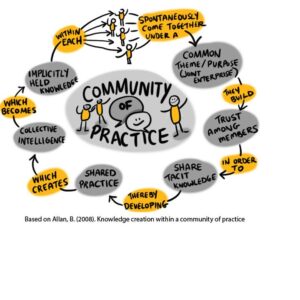
Communities bring together people who face similar challenges every day. They exchange ideas, share practical experiences, discuss failures, and collectively solve problems that no single expert could address alone. This process, known as peer-to-peer learning, creates a form of collective intelligence that is dynamic, practical, and constantly evolving.
Conferences play a crucial role in fostering these communities. They provide a space where professionals move beyond passive learning and actively contribute to the industry’s shared knowledge.
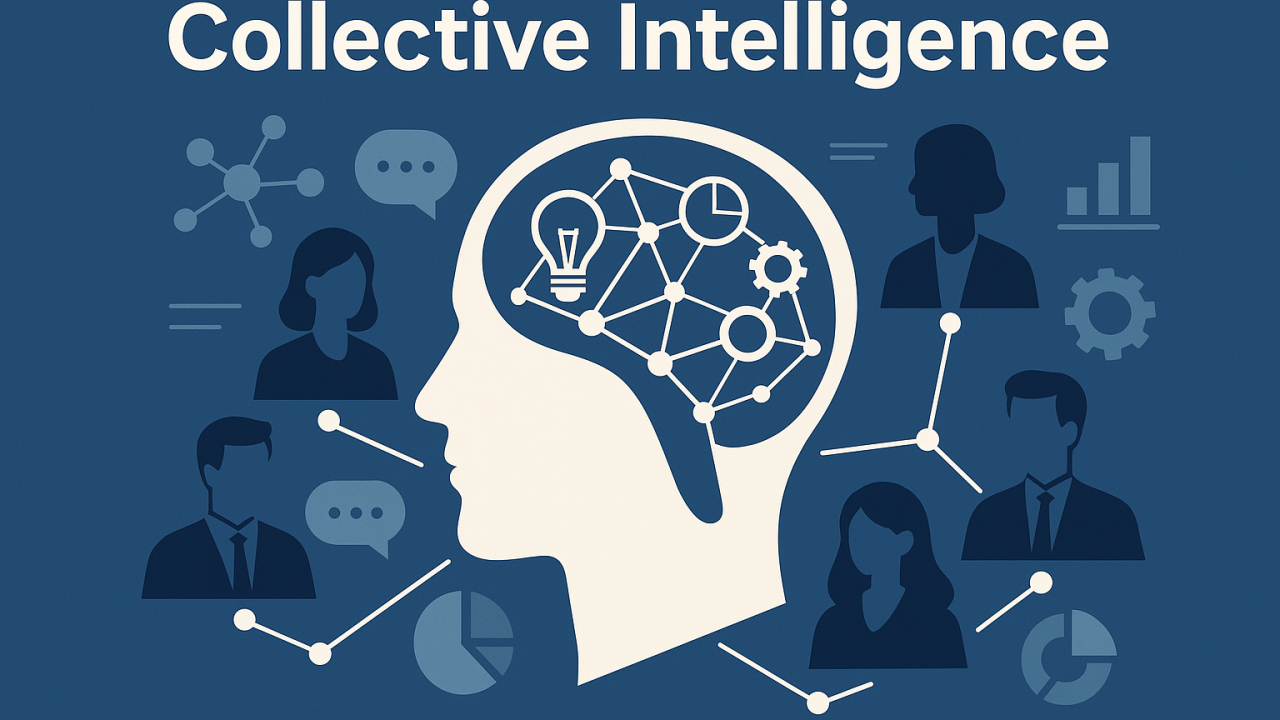
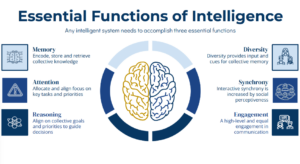
Collective intelligence refers to the ability of a group to solve problems and generate insights that exceed the capabilities of any individual member.
Unlike traditional top-down education, collective intelligence emerges through collaboration.
Every participant contributes:
Together, these contributions create a richer understanding of complex challenges.
Rather than relying on one authority, knowledge becomes a shared resource that grows with every interaction.

One of the greatest strengths of professional communities is that learning happens between equals.
When peers exchange ideas, discussions are often more open, honest, and practical than formal lectures.
Professionals are willing to share:
These real experiences help others avoid costly mistakes and identify opportunities more quickly.
The value lies not only in success stories but also in understanding what did not work—and why.
Business environments rarely follow textbook scenarios.
Projects encounter unexpected obstacles.
Budgets change.
Markets evolve.
Technologies fail.
Customer behavior shifts.
These realities are difficult to capture in traditional educational materials.
Professionals who have navigated similar situations provide insights that are immediately applicable.
A conversation with someone who has solved a comparable problem often saves weeks of research and experimentation.
Practical experience transforms abstract concepts into actionable knowledge.

Every industry faces recurring questions.
How can operational efficiency be improved?
Which technologies are worth adopting?
How should organizations prepare for regulatory changes?
What hiring strategies actually work?
Professional communities create safe environments where members openly explore these challenges together.
Instead of competing over information, participants collaborate to develop better solutions for everyone.
This shared problem-solving strengthens the entire industry.
Success stories are inspiring.
Failures are educational.
In professional communities, honest discussions about mistakes often provide the greatest value.
Understanding why a project failed can reveal:
These insights help others avoid repeating the same mistakes.
A single well-documented failure can prevent countless future problems across an industry.
Professional communities bring together individuals from different backgrounds.
Participants may include:
Each person approaches challenges differently.
These diverse viewpoints encourage creative thinking and challenge established assumptions.
Innovation often emerges when ideas from different disciplines intersect.

Innovation rarely happens in isolation.
Breakthrough ideas often develop through continuous discussion and refinement.
Professional communities encourage this process by enabling members to:
Knowledge evolves through interaction rather than remaining confined to individual organizations.
The result is faster innovation across entire industries.
A successful conference is more than a series of presentations.
It functions as a temporary knowledge ecosystem where professionals actively exchange expertise.
Formal sessions introduce ideas.
Panel discussions explore different viewpoints.
Networking creates new relationships.
Informal conversations generate fresh perspectives.
Together, these elements create an environment where learning becomes collaborative rather than one-directional.
Every attendee contributes to the event’s collective intelligence.
The strongest professional communities continue long after the conference ends.
Participants remain connected through:
These ongoing interactions allow knowledge to continue evolving throughout the year.
The conference becomes the starting point—not the conclusion—of meaningful professional collaboration.
As industries become increasingly complex, no individual can possess all the answers.
The organizations and professionals who thrive will be those who actively participate in communities where knowledge is continuously shared, challenged, and improved.
Collective intelligence represents a shift away from isolated expertise toward collaborative problem-solving.
Instead of asking, “Who knows the answer?” modern professionals increasingly ask, “Who can help us discover it together?”
That mindset defines the future of professional learning.
Our conference is more than a place to listen to experts—it is where the industry’s collective intelligence comes to life. By bringing together professionals from diverse backgrounds, experience levels, and specializations, the event creates a unique environment for meaningful peer-to-peer learning, open discussion, and practical knowledge sharing.
Beyond keynote sessions, participants have countless opportunities to exchange real-world experiences, explore challenges with fellow professionals, and contribute their own insights to the community. Every conversation, workshop, and networking session helps build a stronger, more connected industry where knowledge is created collaboratively rather than consumed passively.
Whether you’re an experienced leader or just beginning your professional journey, our conference is the ideal place to learn from others, share your own experiences, and become part of a community that continues to grow and evolve long after the event concludes.